The magic of a wedding—the vows, the flowers, the first dance—often masks a daunting financial reality: weddings are expensive, and costs can spiral out of control with alarming speed. For many couples, the initial excitement of planning is quickly replaced by “budget anxiety,” the nagging feeling that a few unplanned decisions could lead to thousands of dollars in unexpected debt. This is where a wedding budget template becomes more than just a spreadsheet; it becomes your financial roadmap and a safeguard for your future together.
The Strategic Value: Why a Wedding Budget Template is Non-Negotiable
Many couples attempt to track their wedding spending using a simple mental note or a scattered list of receipts. However, the “hidden” costs of a wedding—such as service charges, gratuities, and last-minute alterations—often account for 10% to 20% of the total spend. Without a dedicated wedding budget template, these leaks go unnoticed until the final invoice arrives.
The primary value of a formal budget document lies in financial accountability. When you assign a specific dollar amount to a category, you create a psychological boundary. If you decide to upgrade your floral arrangements, the template immediately shows you which other category (perhaps the favors or the cake) must be reduced to maintain equilibrium. This prevents the “creep” of expenses that occurs when decisions are made in isolation.
Furthermore, a template serves as a critical communication tool. Whether you are splitting costs with a partner or managing contributions from parents, having a shared document eliminates ambiguity. It transforms emotional conversations about money into objective discussions about numbers, reducing conflict and ensuring everyone is aligned on the financial vision of the event. In short, the risk of not using one is not just financial overspending, but the unnecessary emotional stress that accompanies financial uncertainty.
Anatomy of a Perfect Wedding Budget Template: Essential Components
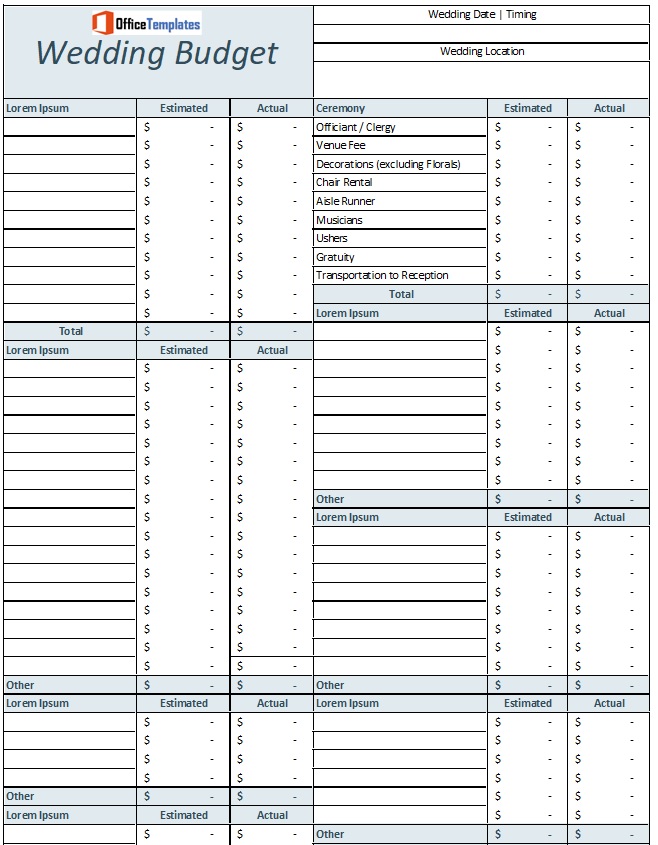
Not all spreadsheets are created equal. To be truly effective, your wedding budget template must be comprehensive, covering both the obvious and the overlooked. A high-quality template should be divided into the following core sections and fields:
1. The Summary Dashboard
- Total Budget Ceiling: The absolute maximum amount you can spend.
- Total Spent to Date: A dynamic sum of all actual costs.
- Remaining Balance: The difference between your ceiling and current spend.
- Contribution Tracker: A section to log funds provided by family members or savings.
2. Detailed Expense Categories
Your template should break costs down into thematic clusters to avoid missing small items:
- Venue & Catering: Site rental fees, food per head, beverage packages, and rentals (tables, chairs, linens).
- Attire & Beauty: Gown, suit, alterations, shoes, jewelry, hair, and makeup.
- Photography & Videography: Engagement shoots, wedding day coverage, and physical albums.
- Floral & Decor: Bouquets, centerpieces, ceremony arches, and lighting.
- Stationery: Save-the-dates, formal invitations, postage, and thank-you notes.
- Entertainment: DJ, live band, sound equipment, and lighting technicians.
3. The Tracking Columns
For every single item listed above, your template must include these four specific columns:
- Estimated Cost: Your “best guess” or the quote provided by the vendor.
- Actual Cost: The final price agreed upon in the contract.
- Amount Paid: Tracking deposits versus the final balance.
- Due Date: When the final payment is required to avoid late fees.
4. The “Emergency Buffer” Line
A professional template always includes a Contingency Fund (typically 5-10% of the total budget) to cover the inevitable surprises.
Download Free Wedding Budget Template

Step-by-Step Guide: How to Customize and Use Your Template
Having the document is only half the battle; the magic happens in the execution. Follow this workflow to maximize the utility of your wedding budget template.
- Establish Your Hard Ceiling: Before entering a single line item, determine the total amount of liquid cash available. Do not include “hopeful” money (money you hope to get). This is your absolute limit.
- Allocate by Priority: Not all categories are equal. Identify your “Non-Negotiables” (e.g., a great photographer) and your “Flexible” items (e.g., expensive favors). Assign the bulk of your budget to the priorities first.
- Input Initial Estimates: Research local vendors and enter estimated costs into the template. If the total exceeds your ceiling, adjust your priorities now rather than six months into planning.
- The “Contract Update” Phase: As you sign contracts, move numbers from the “Estimated” column to the “Actual” column. This gives you a real-time view of how much “wiggle room” you have left for other categories.
- Weekly Financial Audits: Set a recurring calendar invite with your partner every Sunday to review the template. Update payments made and reconcile them with your bank statements to ensure no double-billing has occurred.
- Track the Deposits: Use the “Amount Paid” column to manage your cash flow. Knowing that you have $5,000 due in September helps you manage your monthly savings more effectively.
Best Practices & Common Mistakes to Avoid
To get the most out of your wedding budget template, consider these professional tips:
- Go Digital and Cloud-Based: Use Google Sheets or Excel Online. This allows both partners to update the budget in real-time from their phones while meeting with vendors.
- Avoid the “Misc” Trap: Never create a category called “Miscellaneous.” This is where budgets go to die. Give every expense a name, even if it’s “Parking for Bridal Party.”
- Factor in Taxes and Gratuities: A $5,000 catering quote often excludes a 20% service charge and state tax. Always multiply vendor quotes by 1.3 to see the “real” cost in your template.
- Don’t Overcomplicate: While detail is good, avoid adding 50 different columns. If the template becomes too tedious to update, you will stop using it, and the budget will fail.
Wedding Budgeting: Frequently Asked Questions
How do I handle contributions from parents in my wedding budget template?
The best approach is to create a “Funding Sources” section at the top of your wedding budget template. List each contributor and the specific amount they have committed. Treat these contributions as a “pool” of money rather than assigning them to specific items, which gives you more flexibility in how you allocate funds.
What is the average percentage spent on each wedding category?
While every wedding differs, a general rule of thumb is: 40-50% for venue and catering, 10-15% for photography/videography, 10% for attire and beauty, and 10% for flowers and decor. Use these percentages as a starting point in your template and adjust based on your personal values.
How do I stop my wedding spending from spiraling?
The key is “Zero-Based Budgeting.” Every dollar in your wedding budget template should have a job. If you find a dress that costs $500 more than planned, you must immediately subtract $500 from another category. This “trade-off” mentality prevents the overall total from increasing.
Is a printable wedding budget template better than a digital one?
Printable templates are great for brainstorming, but digital templates are vastly superior for execution. Digital versions perform the math for you, allow for instant edits, and can be shared across devices, reducing the risk of losing data or working with outdated numbers.
Conclusion & Next Steps
A wedding should be a celebration of love, not a source of financial dread. By utilizing a comprehensive wedding budget template, you shift from a reactive state of spending to a proactive state of planning. Don’t leave your financial future to chance—download or build your template today, input your hard ceiling, and start planning your dream day with total confidence.