The holiday season is often framed as the most wonderful time of the year, but for many, it arrives with a side of financial anxiety. Between the pressure of gift-giving, the cost of hosting dinners, and the allure of seasonal sales, it is incredibly easy to succumb to “holiday spend creep.” This is where a Christmas budget sheet becomes more than just a document; it becomes a strategic financial shield. By transforming vague intentions into a concrete mathematical plan, you can shift your focus from the stress of overspending to the joy of celebrating. Whether you are utilizing a complex spreadsheet or a simple printable tracker, the goal is the same: total visibility over every cent leaving your wallet between November and January.
Why a Christmas Budget Sheet is Your Secret Weapon Against Holiday Debt
Many people attempt to “wing it” during the holidays, relying on mental math or a general feeling of how much they have in their bank account. This approach is a recipe for financial chaos. The hidden value of a dedicated Christmas budget sheet lies in its ability to provide an objective reality check. When you assign a specific dollar amount to a category, you create a psychological boundary that prevents impulsive purchasing.
Without a structured tracking system, “small” purchases—a $10 ornament here, a $15 appetizer there—accumulate into hundreds of dollars of unaccounted spending. This often leads to the “January Hangover,” where individuals realize they have depleted their emergency funds or accumulated significant credit card debt to fund a few weeks of festivities. Using a budget sheet ensures accountability; it forces you to prioritize who actually needs a gift and where your money provides the most value.
Furthermore, a budget sheet reduces decision fatigue. Instead of debating whether you can afford a specific luxury item while standing in a crowded store, you simply refer to your allocated budget. If the funds aren’t there, the decision is already made. This streamlines your shopping experience, saves hours of time, and eliminates the guilt that often accompanies post-holiday financial audits.
Anatomy of a Perfect Christmas Budget Sheet: Essential Components
Not all budget trackers are created equal. To be truly effective, your Christmas budget sheet must be comprehensive enough to capture all expenses but simple enough to maintain. A high-quality template should be divided into the following core sections:
- The Total Budget Ceiling: A prominent field at the top stating the absolute maximum amount you are willing to spend. This is your “North Star” metric.
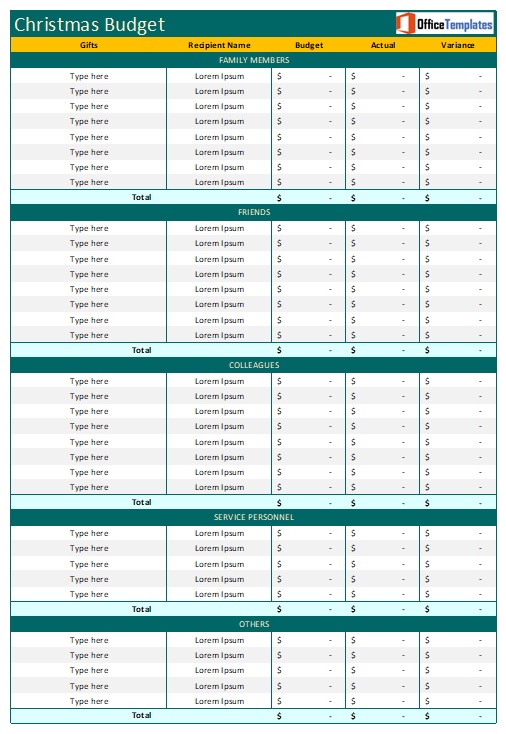
- The Gift Registry/Recipient List: A detailed table featuring:
- Recipient Name: Who is the gift for?
- Budgeted Amount: The maximum you intend to spend on them.
- Actual Spent: The real cost of the item purchased.
- Status: A checkbox for “Purchased,” “Wrapped,” and “Delivered.”
- Event & Hosting Expenses: A dedicated category for non-gift spending, including:
- Groceries & Dining: Special ingredients, appetizers, and holiday meals.
- Decorations: New lights, wreaths, or home refreshes.
- Travel: Gas, flights, or hotel stays for visiting family.
- Miscellaneous/Buffer Fund: A “slush fund” (typically 5-10% of the total budget) to cover unexpected costs, such as a forgotten Secret Santa gift or a last-minute price hike.
- Payment Method Tracker: A column to note whether an item was bought via cash, credit, or a dedicated holiday savings account to ensure you aren’t overdrawing specific accounts.
Step-by-Step Guide: How to Customize and Use Your Christmas Budget Sheet
Implementing a Christmas budget sheet is not a one-time event, but a process that spans the entire season. Follow this chronological workflow to maximize your financial control:
- Phase 1: The Audit (Early November). Start by reviewing your spending from last year. If you have old bank statements, identify where you overspent. Use this data to set a realistic “Total Budget Ceiling” for the current year.
- Phase 2: The Brainstorm & Allocation. List every single person you intend to buy for. Assign a budgeted amount to each person based on your relationship and the total ceiling. Pro Tip: If the total exceeds your ceiling, this is the moment to prune your list or lower the per-person average.
- Phase 3: Real-Time Tracking. As you shop, enter the “Actual Spent” amount immediately. Do not wait until the end of the week; the “leakage” happens in the gaps between purchase and recording. If you spend less than budgeted on one person, move that surplus into your “Buffer Fund.”
- Phase 4: The Weekly Review. Every Sunday, total your columns. Compare your remaining balance against the number of gifts left to buy. This allows you to adjust your spending habits in real-time before you hit a financial wall.
- Phase 5: Post-Holiday Analysis. Once the season ends, calculate the variance between your budgeted and actual spending. This will serve as the blueprint for next year’s Christmas budget sheet.
Download Free Christmas Budget Sheet

Best Practices & Common Mistakes to Avoid
To get the most out of your financial tracking, consider these professional tips:
Embrace Digital Automation: While printable sheets are aesthetically pleasing, using a digital spreadsheet (Google Sheets or Excel) allows for automatic calculations. Using formulas to subtract “Actual Spent” from “Budgeted Amount” provides an instant, accurate view of your remaining funds.
Avoid the “Misc” Trap: A common mistake is creating a giant “Miscellaneous” category. When a category is too broad, it becomes a dumping ground for overspending. Instead, break “Misc” into specific sub-categories like “Wrapping Paper” or “Greeting Cards.”
Don’t Forget Hidden Costs: Many people forget to budget for shipping fees, gift taxes, or the extra calories (and costs) of holiday treats. Ensure these are accounted for in your hosting or buffer sections to avoid surprises.
Frequently Asked Questions About Christmas Budgeting
How do I determine a realistic limit for my Christmas budget sheet?
A realistic limit should be based on your current disposable income, not your desired lifestyle. A good rule of thumb is to look at your average monthly surplus and divide it across the holiday months. Avoid using credit cards to fund your budget; if the money isn’t in your account, the budget limit should be lowered accordingly.
What is the difference between a Christmas budget sheet and a general monthly budget?
A general monthly budget covers recurring expenses like rent and utilities. A Christmas budget sheet is a “project-based” budget. It is designed for a short-term, high-intensity spending period. It allows you to track specific recipients and one-off event costs without cluttering your primary financial records.
Should I include “experience gifts” in my budget sheet?
Absolutely. Whether it is a movie ticket, a cooking class, or a spa day, experience gifts still carry a price tag. Record these in your recipient list just like a physical gift to ensure the total cost of the experience (including taxes and booking fees) is captured.
What should I do if I go over my budget on a Christmas budget sheet?
The beauty of the sheet is that it alerts you to the problem early. If you overspend in one category, you must “rob” another category to balance the books. For example, if you spend more on a spouse’s gift than planned, reduce your spending on home decorations or dining out to compensate.
Start Your Stress-Free Holiday Today
Financial peace of mind is the best gift you can give yourself this year. By utilizing a structured Christmas budget sheet, you replace uncertainty with a clear, actionable plan. Don’t wait until the Black Friday rush—start mapping out your allocations today and reclaim your holiday joy from the stress of debt.