There is a specific kind of anxiety that hits three days after a dream vacation: the “financial hangover.” You return home, open your banking app, and realize that those “small” impulsive purchases—the extra gelato in Rome, the unplanned taxi ride in Tokyo, or the overpriced airport lounge—have spiraled into a budgetary nightmare. Whether you are planning a multi-city European excursion or a quick corporate business trip, the difference between a relaxing journey and a financial crisis is a structured plan.
The Hidden Value: Why a Travel Budget Template is Non-Negotiable
Many travelers dismiss the idea of a formal budget, opting instead for a “daily limit” approach. However, this method fails because travel expenses are rarely linear. A single flight booking or a luxury hotel stay can consume 40% of your total funds, while other days might cost very little. Without a comprehensive travel budget template, you are essentially flying blind.
The primary value of a structured template lies in variance analysis. By comparing your “estimated cost” against your “actual spend,” you gain an immediate understanding of where your money is leaking. This accountability prevents the “death by a thousand cuts” scenario, where small, unaccounted-for expenses erode your savings.
Beyond personal finance, a detailed budget serves as a psychological safety net. When you have already allocated a “slush fund” for emergencies or spontaneous adventures, you eliminate the stress of the unknown. You aren’t just tracking money; you are buying peace of mind. Furthermore, for those traveling for business, a rigorous template ensures a seamless reimbursement process, providing a clean audit trail that minimizes disputes with accounting departments and ensures you aren’t paying out of pocket for company expenses.
Anatomy of a Perfect Travel Budget Template
Not all templates are created equal. A basic list of costs is insufficient. To truly master your finances, your travel budget template must be categorized by spending type and timing. Here are the essential components every high-functioning travel budget must include:
1. Pre-Trip Fixed Expenses
- Documentation & Visas: Passport renewals, visa application fees, and travel insurance.
- Gear & Clothing: New luggage, weather-appropriate attire, or adapters.
- Vaccinations/Medical: Required shots or prescription medications for long-term travel.
2. Transportation Logistics
- Long-Haul Transit: Flights, trains, or long-distance buses (including taxes and baggage fees).
- Local Transit: Ride-sharing (Uber/Grab), public transit passes, car rentals, and fuel/parking.
3. Accommodation Costs
- Nightly Rates: The base cost of hotels, Airbnbs, or hostels.
- Taxes & Fees: Resort fees, city tourism taxes, and cleaning fees.
4. Daily Variable Expenses
- Dining & Beverages: Breakfast, lunch, dinner, and the “coffee budget.”
- Activities & Attractions: Museum tickets, guided tours, and entrance fees.
- Shopping & Souvenirs: Gifts for others and personal mementos.
5. The “Safety Net” (Contingency Fund)
- Emergency Buffer: A dedicated line item (typically 10-15% of the total budget) for unexpected mishaps, such as a lost phone or a missed connection.
Step-by-Step Guide: How to Customize and Use Your Template
Simply downloading a travel budget template isn’t enough; the magic happens in the execution. Follow this chronological workflow to ensure your budget remains accurate and actionable.
- Phase 1: The Research Phase (Estimation): Start by browsing sites like BudgetYourTrip or Numbeo to get a sense of average costs in your destination. Fill in the “Estimated” column of your template. Be conservative—always round up your estimates to avoid underfunding your trip.
- Phase 2: The Allocation Phase: Decide on your total spending limit. If your estimated costs exceed your available funds, use the template to identify where to trim. Should you opt for a hostel instead of a hotel? Or perhaps limit your fine-dining experiences to once a week?
- Phase 3: The Active Tracking Phase: This is where most people fail. Update your travel budget template daily. Use a mobile app or a cloud-based spreadsheet (like Google Sheets) to log expenses in real-time. If you spend $50 on a dinner that was budgeted for $30, you know immediately that you need to save $20 on tomorrow’s lunch.
- Phase 4: The Post-Trip Review: Once you return, compare your total actual spend against your original estimate. This data is invaluable for planning your next adventure, as it provides a personalized benchmark for your spending habits.
Download Free Travel Budget Template
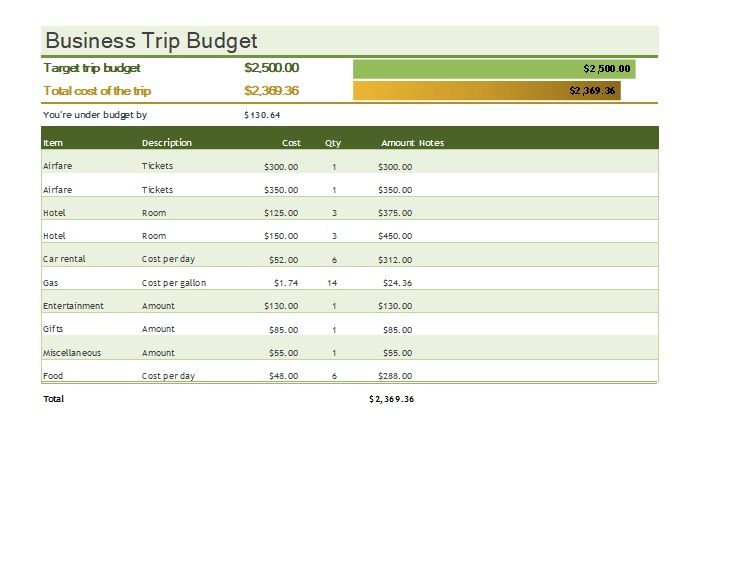

Best Practices & Common Mistakes to Avoid
To maximize the efficiency of your financial planning, consider these professional tips:
- Automate Your Math: Use formulas (SUM and subtraction) in your spreadsheet. Manual calculation leads to errors and frustration.
- Categorize by Currency: If traveling internationally, include a column for the local currency and a conversion formula to your home currency to avoid “math fatigue” while shopping.
- Avoid “Over-Categorization”: Don’t create a separate line item for every single snack. Group small spends into a “Miscellaneous” or “Daily Incidental” category to keep the document manageable.
- Cloud Syncing: Never keep your budget on a local hard drive. Use a cloud-synced document so you can access it via your smartphone while on the move.
Travel Budgeting FAQ
How do I determine a realistic daily allowance in a travel budget template?
The best approach is to research the “Mid-Range” cost of living for your destination. Look for the average cost of a meal, a coffee, and a transit ticket. Multiply these by your planned frequency and add a 20% buffer for spontaneity. This ensures your travel budget template reflects reality rather than an idealized version of the trip.
Should I include “hidden costs” like ATM fees in my template?
Absolutely. Bank conversion fees, ATM withdrawal charges, and foreign transaction fees can easily add up to hundreds of dollars on a long trip. Create a specific “Banking & Fees” section to ensure these invisible costs don’t surprise you at the end of the month.
What is the best software for a travel budget template?
For most users, Google Sheets or Microsoft Excel is the gold standard because of their flexibility and formula capabilities. However, if you prefer a more automated experience, apps like TripCoins or Wanderlog integrate budgeting features directly with itinerary planning, though they may lack the deep customization of a dedicated spreadsheet.
Final Thoughts: Start Your Journey Right
Financial stress is the fastest way to ruin a vacation. By utilizing a comprehensive travel budget template, you shift your focus from the anxiety of spending to the joy of experiencing. Stop guessing and start planning—your future self (and your bank account) will thank you. Download or build your template today and travel with total confidence.