We have all been there: the mid-December realization that the “small” gifts and spontaneous dinner parties have snowballed into a financial mountain. The festive season is designed for joy, but for many, it is a catalyst for credit card debt and financial anxiety. The difference between a stressful December and a serene one isn’t how much money you make—it’s how you track it. This is where a holiday budget sheet becomes your most powerful tool. More than just a list of expenses, a dedicated budget sheet is a strategic roadmap that allows you to enjoy the celebrations without compromising your long-term financial health.
The Deep Dive: Why a Holiday Budget Sheet is Non-Negotiable
Most people approach holiday spending with a “mental tally,” which is a recipe for disaster. Cognitive biases often lead us to underestimate the cost of “small” additions—the wrapping paper, the greeting cards, the appetizers—which can easily add up to hundreds of dollars in unplanned spending. A holiday budget sheet transforms your spending from reactive to proactive.
The hidden value of this document lies in financial accountability. When you commit a number to a spreadsheet or a piece of paper, you create a psychological boundary. It forces you to prioritize. Instead of wondering where your money went in January, you decide where it goes in October.
Beyond simple tracking, using a budget sheet mitigates the “holiday hangover”—that crushing feeling of credit card interest accumulating just as the New Year begins. By utilizing a structured system, you avoid the temptation of relying on high-interest debt to fund seasonal traditions. Essentially, this document serves as an audit trail for your personal life, ensuring that your generosity toward others doesn’t lead to negligence toward your own savings goals.
Anatomy of a Perfect Holiday Budget Sheet
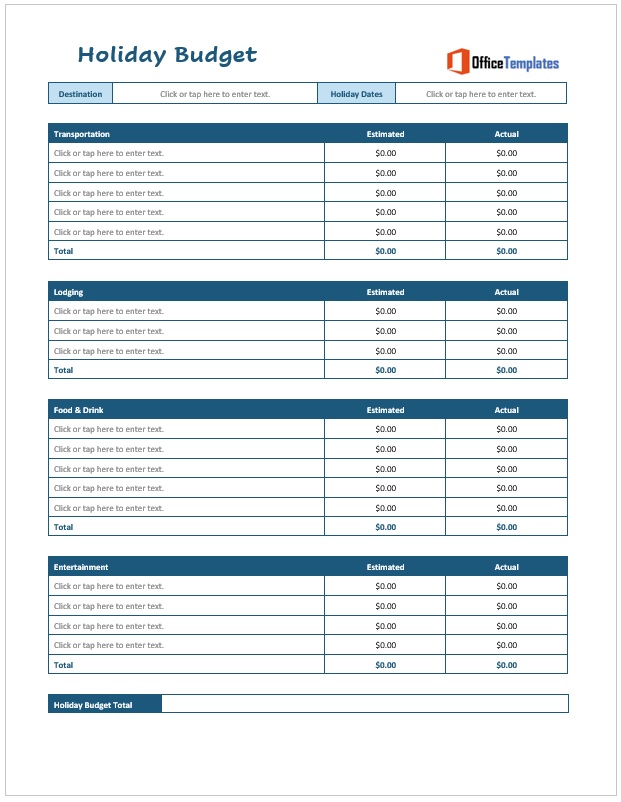
Not all trackers are created equal. To truly gain control over your finances, your holiday budget sheet needs to be granular. A simple “Gifts” category is not enough. To maximize efficiency, your document should be divided into the following core components:
- The Income/Allocation Source: A clear section detailing exactly where the money is coming from. Is it a dedicated “holiday fund” saved throughout the year, a portion of your monthly salary, or a specific bonus?
- The Recipient Master List: A dedicated column for every person you intend to buy for. This prevents the “forgotten gift” panic buy, which usually results in overpriced, last-minute purchases.
- Budgeted vs. Actual Columns: This is the most critical element. One column for what you plan to spend and another for what you actually spent. This delta allows you to adjust spending in real-time.
- Category Breakdown:
- Gifts: Separated by individual or group.
- Food & Entertaining: Including groceries for hosting and restaurant outings.
- Decorations & Attire: New ornaments, lights, or a specific outfit for a party.
- Travel & Logistics: Gas, flights, hotels, and parking.
- Miscellaneous: The “buffer” zone for greeting cards and gift wrap.
- Payment Method Tracker: A column to note if the item was bought via cash, debit, or credit, ensuring you can reconcile your bank statements easily.
- Status Checkbox: A simple “Bought/Wrapped/Delivered” toggle to track the logistical progress of your shopping.
Download Free Holiday Budget Sheet

Step-by-Step Guide: How to Customize and Use Your Budget Sheet
Implementing a holiday budget sheet is a process, not a one-time event. Follow this chronological workflow to ensure maximum effectiveness:
- The Forecast Phase (Early Autumn): Start by reviewing your spending from the previous year. Look at your bank statements from November and December. This provides a baseline of your “natural” spending habits and helps you set a realistic total budget.
- The Allocation Phase: Divide your total budget across the categories mentioned in the anatomy section. If you have $1,000, you might allocate $600 to gifts, $200 to food, $100 to travel, and $100 as a safety buffer.
- The Listing Phase: List every recipient. Assign a “max spend” for each person. If you realize the total exceeds your budget, this is the time to adjust expectations or opt for more thoughtful, less expensive gifts.
- The Execution Phase (Real-Time Tracking): As you shop, enter the actual price immediately. Do not wait until the end of the week. The “immediate entry” method prevents the psychological disconnect between spending and recording.
- The Pivot Phase: If you overspend on a gift for a family member, look at your holiday budget sheet and identify where you can trim. Perhaps you spend $20 less on decorations to offset the cost. This constant balancing act keeps you in the green.
Best Practices and Common Mistakes to Avoid
To get the most out of your holiday budget sheet, consider these professional tips:
Pro-Tip: Go Digital for Automation. While a printable sheet is great for tactile learners, a Google Sheet or Excel file is superior. Use simple formulas (=SUM) to automatically calculate your remaining balance. This provides an instant visual cue of your financial standing.
Avoid the “Miscellaneous Trap”: Many people create a massive “Misc” category and ignore it. This is where budget leaks happen. Give every dollar a name; if it’s for “extra ribbons,” call it “Gift Wrapping,” not “Misc.”
Don’t Forget the “Hidden” Costs: A common mistake is forgetting the cost of shipping, gift taxes, or the surge in Uber prices during holiday events. Always add a 5-10% “contingency buffer” to your total budget to account for these anomalies.
Frequently Asked Questions about Holiday Budgeting
How do I start a holiday budget if I’m already overspent?
The first step is a “spending freeze.” Use your holiday budget sheet to list every remaining obligation and prioritize them by necessity. Be honest about what you can afford and communicate early with loved ones about simpler celebrations. Transitioning to a “DIY” or “experience-based” gift strategy can help you fulfill obligations without adding to your debt.
What is the best app or software for a holiday budget sheet?
While dedicated budgeting apps like YNAB or Mint are excellent, a customized spreadsheet (Excel or Google Sheets) is often better for seasonal tracking. Spreadsheets allow you to create specific columns for gift lists and delivery statuses that generic finance apps don’t provide. If you prefer something simpler, a printable PDF holiday budget sheet is perfect for those who find digital tools overwhelming.
How do I handle unexpected guest lists or last-minute party invites?
This is why the “Buffer/Contingency” category in your holiday budget sheet is essential. Set aside a small percentage of your total budget specifically for “Unplanned Socializing.” If the budget is already maxed out, stick to a “potluck” style contribution—bringing a homemade dish is often more appreciated than an expensive store-bought gift.
Should I include my travel expenses in the same budget as my gifts?
Yes. By integrating travel, lodging, and food into one holiday budget sheet, you get a holistic view of the “cost of the season.” Separating them often leads to a false sense of security, where you think you are under budget on gifts while ignoring the $500 you spent on gas and hotels.
Conclusion: Take Control of Your Season
Financial stress is the only guest you shouldn’t invite to your holiday party. By implementing a detailed holiday budget sheet, you shift from a state of financial chaos to one of intentionality and peace. Whether you use a high-tech spreadsheet or a simple printed log, the act of tracking is the act of taking control. Start your sheet today, set your boundaries, and reclaim your festive joy.