Few things are as stressful as the “end-of-month mystery”—that moment when you check your bank balance and wonder exactly where your hard-earned money went. Whether you are managing a household, launching a freelance business, or trying to crush student loan debt, the chaos of unplanned spending is a universal pain point. This is where a budget worksheet template transforms from a simple document into a powerful financial roadmap. Rather than guessing your way through the month, a structured worksheet allows you to intentionally assign every dollar a purpose, ensuring that your spending aligns with your actual priorities rather than impulsive desires.
The Deep Dive: Why a Budget Worksheet Template is Non-Negotiable for Financial Success
Many people confuse a “budget” with a “restriction.” In reality, a budget is a permission slip to spend. When you utilize a professional budget worksheet template, you aren’t just tracking numbers; you are implementing a system of accountability and psychological clarity.
The hidden value of a dedicated worksheet lies in variance analysis. By comparing your “planned” spending against your “actual” spending, you identify leakages—those small, recurring expenses that silently erode your wealth. Without this document, these leaks remain invisible. For business owners, this level of granularity is the difference between a healthy profit margin and a cash-flow crisis. For individuals, it provides the “audit trail” necessary to pivot strategies when a financial goal isn’t being met.
The risks of avoiding a structured template are significant. Relying on mental math or basic banking apps often leads to “optimism bias,” where you underestimate expenses and overestimate income. This leads to a cycle of reactive spending, where you are constantly putting out financial fires instead of building a fortress of savings. A template forces a confrontation with reality, removing the emotion from spending and replacing it with data-driven decision-making.
Anatomy of a Perfect Budget Worksheet Template: Essential Components
Not all templates are created equal. A generic list of expenses isn’t enough. To truly gain control of your finances, your budget worksheet template must include these specific, high-utility sections:
- Income Stream Log: Do not just list one salary. Include columns for primary income, side hustles, dividends, and tax refunds. This should differentiate between Gross Income (before tax) and Net Income (take-home pay).
- Fixed Expenses (The Non-Negotiables): A dedicated area for costs that rarely change, such as rent/mortgage, insurance premiums, internet subscriptions, and loan repayments.
- Variable Expenses (The Flex Zone): This section tracks costs that fluctuate, such as groceries, utilities, entertainment, and dining out. This is where most “budget leaks” occur and requires the most detailed tracking.
- Sinking Funds: A critical but often overlooked section. These are columns for non-monthly expenses (e.g., annual car registration, holiday gifts, or quarterly taxes) where you save a small amount monthly to avoid a future shock.
- Savings & Debt Paydown Goals: A clear area to track contributions to emergency funds, 401(k)s, or specific debt snowball/avalanche payments.
- The Variance Column: A mathematical field that subtracts “Actual” spending from “Planned” spending. A negative number here is an immediate red flag for behavioral adjustment.
- Zero-Sum Totals: A final calculation cell that ensures Income – (Expenses + Savings) = 0. This ensures every cent is accounted for.
Download Free Budget Worksheet Template
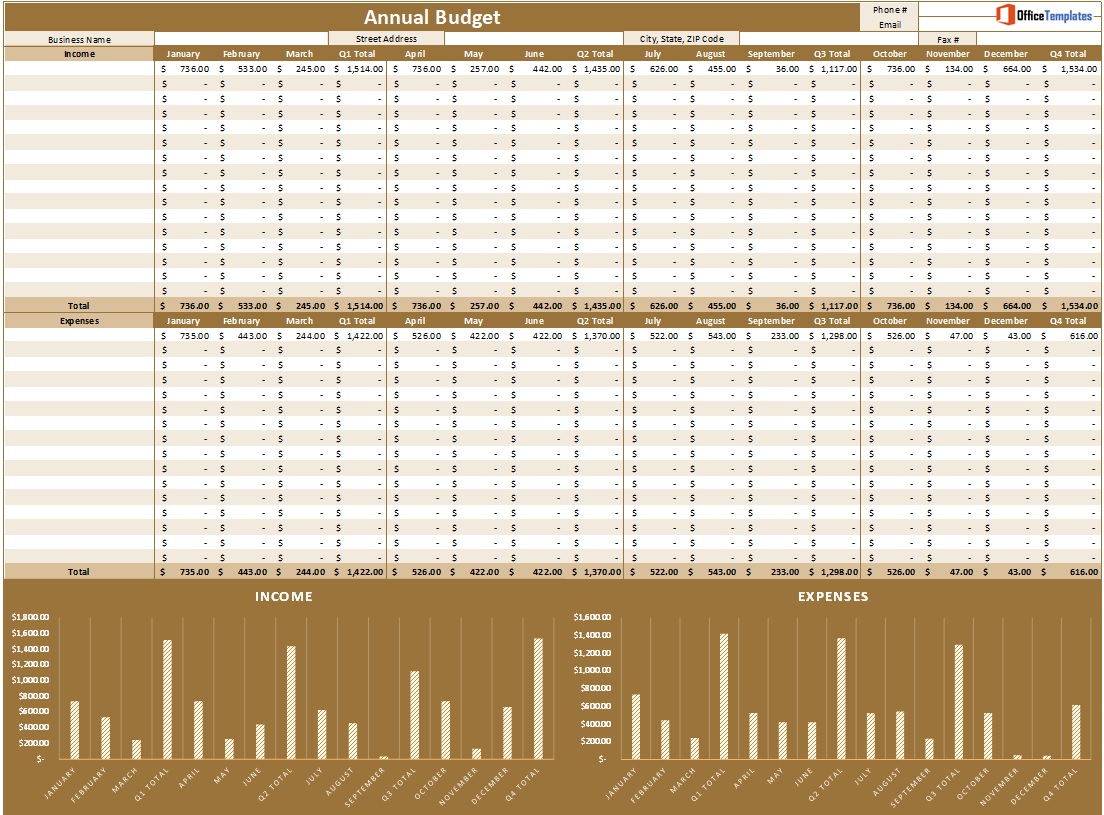

Step-by-Step Guide: How to Customize and Use Your Budget Worksheet Template
Owning the document is only 10% of the battle; the remaining 90% is the consistent application of the workflow. Follow this chronological process to maximize the efficiency of your budget worksheet template:
- The Pre-Month Setup (The Plan): At the end of the current month, open your template for the upcoming month. Enter your expected income and allocate funds to your fixed and variable categories. This is your “hypothesis” of how the month will go.
- The Weekly Pulse Check (The Tracking): Do not wait until the end of the month to enter data. Set a “Money Date” every Sunday. Review your bank statements and input your actual spending into the variable expenses section. This prevents the overwhelming task of sorting through 30 days of receipts at once.
- The Mid-Month Pivot: Around the 15th, look at your variance column. If you have already spent 80% of your “Dining Out” budget, you know you must shift funds from another category or cut back for the remainder of the month to stay balanced.
- The Month-End Review (The Audit): Compare your total actuals against your plan. Analyze why certain categories were overspent. Was it a one-time emergency or a lifestyle creep? Use these insights to adjust the numbers for next month’s template.
- The Archiving Process: Save each month as a separate tab or file. This creates a historical trend report, allowing you to see seasonal spending patterns (e.g., higher electricity bills in July) and plan for them in advance.
Best Practices & Common Mistakes to Avoid
To get the most out of your budget worksheet template, consider these professional tips:
Pro-Tips for Efficiency: If using a digital spreadsheet, utilize Data Validation (drop-down menus) to categorize expenses quickly. For those who prefer tactile feedback, print a physical copy and pin it to the fridge, but transcribe the data into a digital backup once a month for long-term tracking.
Common Pitfalls to Avoid:
- Over-Categorization: Don’t create 50 different categories. You’ll get bogged down in detail and quit. Group similar items (e.g., “Home Supplies” instead of “Paper Towels,” “Soap,” and “Lightbulbs”).
- The “Miscellaneous” Trap: Avoid a large “Misc” category. If a spending habit is frequent enough to be “miscellaneous,” it deserves its own line item.
- Setting Unrealistic Goals: Budgeting for $0 entertainment when you love socializing is a recipe for failure. Be honest about your habits, then optimize them incrementally.
Frequently Asked Questions about Budget Worksheets
What is the difference between a budget and a budget worksheet?
A budget is the overall financial plan or goal (e.g., “I want to spend $500 a month on groceries”). A budget worksheet template is the operational tool used to track that plan. While the budget is the strategy, the worksheet is the execution and tracking mechanism that proves whether the strategy is working.
How often should I update my budget worksheet?
For maximum accuracy, update your worksheet weekly. Daily tracking is ideal but often unsustainable for most people. Updating monthly is generally too late to make corrective actions, meaning you only find out you overspent after the money is already gone. A weekly cadence strikes the perfect balance between oversight and effort.
Which is better: a digital or printable budget template?
Digital templates (Excel, Google Sheets) are superior for calculations, automation, and historical data analysis. However, printable templates are excellent for those who struggle with digital distractions or prefer the psychological commitment of writing by hand. The “best” one is the one you will actually use consistently.
How do I handle irregular income in a budget worksheet?
If you are a freelancer or commission-based worker, use a “Baseline Budget.” Calculate your lowest-ever monthly income from the previous year and build your worksheet around that. Any income earned above that baseline should be directed immediately into a “Buffer Fund” or “Sinking Fund” within your template to cover leaner months.
Conclusion: Take Control of Your Financial Future
A budget worksheet template is more than just rows and columns; it is the foundation of financial freedom. By moving from passive spending to active tracking, you reclaim power over your life and your goals. Don’t let another month pass in financial ambiguity—download or create your template today and start building the wealth you deserve.