We have all experienced that overwhelming moment when a busy week slips away, leaving us staring at a cluttered home while trying to balance an exhausting work-life routine. Between professional deadlines and personal commitments, it is easy for household chores to pile up until the mess feels insurmountable. This is where a structured cleaning schedule template becomes an essential tool for regaining control. By organizing your home maintenance into a manageable cleaning checklist, you can transform chaotic deep cleaning sessions into a sustainable daily cleaning routine. Whether you are coordinating a shared household chore chart for family members or seeking a systematic weekly cleaning plan to complement your study or training blocks, a tailored approach prevents burnout. Utilizing a professional cleaning organizer helps you track progress across different rooms, ensuring that no corner is forgotten. Implementing a consistent cleaning system simplifies your environment, clearing the mental space needed to focus on what truly matters in your daily life.
Why We Need Cleaning Schedule Template
Maintaining a home often feels like an endless battle against entropy, where the moment one room is tidy, another descends into chaos. For many, the primary struggle isn’t a lack of will, but a lack of a sustainable system. When we rely on memory or sporadic bursts of motivation, we often fall victim to poor time management, spending hours on a deep clean once a month while letting daily essentials slip through the cracks. This inconsistency creates a cycle of stress, where the overwhelming sight of a cluttered space leads to mental fatigue and a feeling of failure, making it even harder to start.
A cleaning schedule template transforms this chaotic approach into a manageable rhythm. By externalizing the mental load, a structured template removes the decision fatigue of wondering what needs to be done today. It replaces the anxiety of missed deadlines and forgotten chores with a clear, visual roadmap that fosters consistency. As routines become automatic, the psychological burden lifts, allowing for a sense of control and predictability. Ultimately, this transition from reactive cleaning to proactive planning reduces daily stress, improves overall productivity, and restores the home as a sanctuary of peace rather than a source of pressure.
Key Elements of Cleaning Schedule Template
An effective cleaning schedule template begins with clearly defined time slots, which provide a necessary temporal framework that prevents a day from slipping away while ensuring that no single area is over-cleaned at the expense of others. Within these time blocks, detailed task descriptions are essential; by specifying exactly what needs to be done—such as “sanitize countertops” rather than just “clean kitchen”—the schedule eliminates ambiguity and ensures a consistent standard of hygiene. This clarity allows for the seamless integration of priority levels, which guide the user to tackle high-traffic or high-risk zones first, ensuring that the most critical goals are met even if the day is interrupted. By establishing these specific goals, the schedule transforms from a random list of chores into a strategic plan focused on maintaining a healthy and orderly environment.
To keep the schedule practical and sustainable, the inclusion of scheduled breaks is vital, as they prevent burnout and maintain the user’s physical energy levels throughout the process. This human element leads naturally into the need for a robust system for tracking progress, such as checkboxes or status markers, which provides a psychological sense of accomplishment and ensures that no small but important detail is overlooked. However, because real-life interruptions are inevitable, the most successful templates incorporate a layer of flexibility. This might manifest as “buffer time” or adaptable slots that allow the user to shift tasks without the entire system collapsing. When these elements work in harmony, the schedule ceases to be a rigid set of demands and instead becomes a dynamic tool that balances rigorous cleanliness with the realities of a busy lifestyle. By blending structured timing with adaptable goals and mindful recovery, the template ensures that the environment remains pristine while the process remains manageable and stress-free.
Free Cleaning Schedule Template to Download
Stop stressing over where to start and reclaim your free time. Our ready-made templates take the guesswork out of tidying, offering a convenient, easy-to-use way to stay organized. Simply download your favorite design and enjoy a cleaner, more peaceful home without the planning hassle.
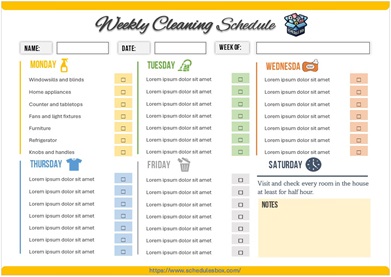

Understanding the various types of cleaning schedule templates is essential because no two environments share the same hygiene requirements or operational rhythms. A one-size-fits-all approach often leads to either overlooked areas or wasted resources. Whether managing a bustling medical facility, a corporate office, or a private residence, the scheduling approach must align with the specific goals of the space. For some, the priority is a superficial level of tidiness for aesthetic purposes, while for others, rigorous sanitization is a legal and health mandate. By selecting the correct framework, a manager can ensure consistency, maintain asset longevity, and create a healthy environment without overwhelming the staff or the budget.
Types of Cleaning Schedule Template
One of the most common frameworks is the Daily Cleaning Schedule, which is designed for high-traffic areas that accumulate grime rapidly. This template focuses on the immediate and the repetitive, highlighting tasks that must be completed every single day to maintain a baseline of cleanliness. It is most effective in environments like restaurants or retail stores where surfaces are touched constantly and floors collect debris hourly. By documenting these recurring duties, the template ensures that essential habits—such as emptying trash bins or wiping down counters—become instinctive and are never skipped during a busy shift.
As the need for deeper maintenance arises, the Daily Schedule transitions naturally into the Weekly Cleaning Schedule. While daily tasks prevent chaos, the weekly template focuses on “deep-dive” areas that do not require constant attention but would become problematic if ignored for a month. This approach is ideal for residential homes or smaller offices, where tasks like vacuuming under furniture, dusting high shelves, or disinfecting door handles can be rotated throughout the week. This method prevents the buildup of allergens and grime, ensuring that the environment remains fresh without requiring an exhaustive deep clean every single day.
For specialized facilities, the Monthly and Quarterly Cleaning Schedule provides a broader strategic view. These templates are geared toward heavy-duty maintenance and preventative care, focusing on tasks that are often invisible but critical. Examples include cleaning HVAC filters, steam-cleaning carpets, or polishing exterior windows. Because these tasks are time-consuming and infrequent, a long-term template prevents them from being forgotten. This systemic approach is particularly vital in industrial settings where machine maintenance and deep scrubbing of warehouse floors are necessary to meet safety regulations and operational standards.
Finally, the Zone-Based Cleaning Schedule offers a different perspective by focusing on geography rather than frequency. Instead of listing tasks by time, this template divides a building into specific sectors, such as the lobby, the breakroom, or the restrooms. Each zone has its own dedicated set of requirements and assigned personnel. This is the gold standard for large-scale commercial facilities or hospitals, where cross-contamination must be avoided and specialized equipment is needed for different areas. By organizing the schedule by zone, management can easily track which areas are completed and ensure that the specific needs of a high-risk zone are met with a level of precision that a general time-based list could not provide.
Perfecting Your Cleaning Schedule Template
Understanding the common pitfalls when designing a cleaning schedule is essential because a template is only as valuable as its usability. Many people approach scheduling with an idealized version of their productivity rather than their actual capacity. When a schedule is built on unrealistic expectations or vague goals, it ceases to be a helpful guide and instead becomes a source of stress or guilt. By identifying where these templates typically fail, you can transition from a rigid document that is destined to be ignored to a dynamic system that promotes a genuinely clean environment without leading to burnout.
The Pitfalls of Planning
A frequent mistake that undermines an entire system is the tendency to over-schedule the day, often referred to as the “optimism bias.” This happens when a person lists every single chore they wish they could accomplish in a single window of time without accounting for the actual duration of the tasks or the necessary transition periods between them. When the day inevitably deviates from this rigid plan, the individual feels a sense of failure, which often leads to abandoning the schedule entirely. This lack of flexibility naturally leads into the problem of vague task descriptions. Many templates simply list “Clean Kitchen,” which is far too broad to be actionable. Because the task is not broken down into specific steps like wiping counters or mopping floors, the brain perceives the chore as a monumental mountain rather than a series of small steps. This ambiguity creates mental friction, leading to procrastination and a decrease in overall productivity.
As the schedule grows in complexity, another common error emerges: the failure to account for the varying levels of effort required for different tasks. Many planners treat all “weekly” chores as equals, placing a deep-cleaning of the bathrooms on the same day as a light dusting of the living room. This imbalance creates “spike days” where the workload is overwhelming, followed by days of inactivity. This uneven distribution of labor prevents a sustainable rhythm and often results in the most demanding tasks being pushed back indefinitely. This struggle with pacing often intersects with a lack of resource planning. A schedule might call for vacuuming the entire house, but if the vacuum is stored in a distant garage or the filters are clogged, the momentum is lost. When the template ignores the logistical requirements—such as having the right supplies on hand—the friction of preparation outweighs the desire to clean.
Finally, many people fall into the trap of creating a static document that never evolves. They treat the cleaning schedule as a set of laws rather than a living experiment. When a specific routine proves to be inefficient or a certain day of the week consistently proves too busy for heavy lifting, the static template remains unchanged. This rigidity prevents the user from optimizing their workflow based on real-world experience. By failing to build in a review process, the schedule eventually becomes a relic of a lifestyle they no longer lead, rather than a tool that supports their current needs. By avoiding these traps—balancing the workload, defining tasks clearly, preparing resources, and remaining flexible—you can create a template that truly serves your home and your well-being.