Imagine the chaos of a community event where passionate helpers arrive with eagerness, but no one knows where to stand or when to switch shifts. This common struggle often leads to burnout, overlapping duties, and missed deadlines, turning a rewarding experience into a stressful ordeal. To regain control, implementing a structured volunteer schedule template is the ultimate solution, transforming disorganized efforts into a streamlined operation. By utilizing a clear shift calendar and an effective volunteer management system, you can easily coordinate staff assignments and track hours without the usual confusion. Whether you are organizing a non-profit project, a study group, or a professional training routine, a dedicated scheduling tool ensures balanced workloads and consistent coverage. These templates simplify the process of signing up volunteers and managing rotations, allowing you to focus on your mission rather than the logistical headache of a messy roster.
Why We Need Volunteer Schedule Template
Managing a group of volunteers is often an act of balancing passion with unpredictability. Without a structured system, the initial excitement of giving back can quickly dissolve into a chaotic swirl of missed shifts and overlapping commitments. When people rely on informal agreements or fragmented texts, poor time management becomes inevitable. Volunteers may forget their time slots, and organizers often find themselves scrambling at the last minute to fill critical gaps, leading to missed deadlines and a frustrating lack of consistency that jeopardizes the mission of the organization.
This instability creates an emotional toll, where the stress of mismanagement outweighs the joy of service. A dedicated volunteer schedule template transforms this friction into flow. By providing a clear, visual roadmap, it eliminates ambiguity and anchors everyone to a reliable routine. When expectations are documented and transparent, the mental burden of remembering “who is doing what” disappears, replaced by a sense of professional clarity. This structure not only boosts overall productivity but also fosters a culture of accountability and peace. Ultimately, a template allows volunteers to show up with confidence and focus, turning erratic efforts into a sustainable, impactful contribution.
Key Elements of Volunteer Schedule Template
An effective volunteer schedule begins with clearly defined time slots, which establish a predictable rhythm and ensure that the organization is adequately staffed throughout the day. These timeframes are only useful when paired with detailed task descriptions, as clarifying exactly what is expected prevents confusion and empowers volunteers to step into their roles with confidence. To ensure that the most critical needs are met first, these tasks should be categorized by priority, allowing the team to focus their energy on high-impact activities while treating secondary goals as bonuses. This prioritization naturally aligns with the overarching goals of the event or project, providing volunteers with a sense of purpose by showing them how their individual contributions lead to a larger success.
To maintain this momentum and prevent burnout, the schedule must intentionally integrate scheduled breaks, recognizing that a well-rested volunteer is more productive and positive than one who is overworked. These intervals of rest create a sustainable environment, which in turn supports a robust system for tracking progress. By including a method to check off completed milestones, coordinators can visualize the workflow in real-time and identify any bottlenecks before they become problematic. However, because unexpected challenges often arise in volunteer-led initiatives, the template must leave room for flexibility. Whether it is a designated “floating” volunteer or a buffer of unallocated time, building in adaptability ensures that the schedule can bend without breaking when emergencies occur or when certain tasks take longer than anticipated. When these elements flow together, the schedule transforms from a rigid set of instructions into a dynamic tool that balances operational efficiency with a supportive volunteer experience.
Free Volunteer Schedule Template to Download
Stop stressing over complex spreadsheets and start organizing with ease. Our ready-made templates take the guesswork out of coordination, giving you a professional, polished layout in seconds. Simply download, plug in your details, and get back to making a difference with a schedule that works for everyone.
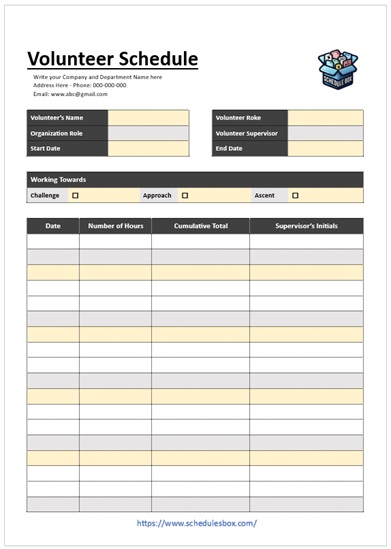

Understanding the various types of volunteer schedule templates is essential because no two organizations operate with the same operational rhythm or human resource needs. A one-size-fits-all approach to scheduling often leads to gaps in coverage, volunteer burnout, or administrative chaos. Depending on whether a nonprofit requires a constant presence at a food bank or a sudden surge of support for a weekend festival, the scheduling approach must shift to match the urgency and duration of the tasks. By selecting the right template, coordinators can ensure that the right skills are in the right place at the right time, maintaining a healthy balance between the organization’s goals and the volunteers’ availability.
Types of Volunteer Schedule Template
One of the most foundational approaches is the Fixed Shift Template. This model is designed for organizations that operate on a predictable, recurring basis, such as a weekly community garden or a permanent staffing desk at a museum. In a fixed shift system, volunteers commit to the same day and time every week, which creates a sense of stability and routine. This approach is ideal for roles that require consistent oversight or long-term relationship building, as it ensures that the same faces are present, reducing the need for constant re-training and allowing the organization to rely on a dependable core of dedicated supporters.
As needs become more fluid, many organizations transition toward the Rotating Shift Template. Unlike the fixed model, the rotating schedule distributes hours across a larger pool of volunteers to prevent any single individual from becoming overwhelmed. This is particularly useful for high-intensity roles or 24/7 operations, such as crisis hotlines or emergency shelters, where the workload is demanding. By cycling volunteers through different time slots, the organization maintains a fresh and energetic workforce while providing volunteers with more flexibility to balance their service with personal commitments. This fluidity ensures that the burden of labor is shared equitably across the team.
When a project is centered around a specific date rather than an ongoing operation, the Event-Based Template becomes the most effective tool. This type of scheduling is tailored for short-term, high-impact activities like annual galas, marathons, or holiday drives. Because these events often require a massive influx of labor for a very limited window, the template focuses on specific “zones” or “tasks” rather than just time slots. For instance, a coordinator might schedule a block of volunteers for registration from 8:00 AM to 10:00 AM and another group for cleanup in the evening. This granular level of detail allows the manager to visualize the entire flow of an event and ensure that critical transition periods are fully staffed.
For organizations that cannot predict exactly when help will be needed, the On-Call or Demand-Based Template offers the necessary agility. Instead of assigning specific slots, this system creates a roster of available volunteers who can be summoned based on real-time needs. This is common in disaster relief or community outreach programs where the volume of work fluctuates wildly from day to day. The focus here is on readiness and rapid communication rather than a rigid calendar. By maintaining a flexible list of “on-call” supporters, the organization can scale its operations up or down instantaneously, ensuring that they can respond to emergencies without the administrative overhead of a permanent schedule.
Mastering the Art of the Volunteer Schedule
Understanding the common pitfalls associated with volunteer schedule templates is essential because a schedule is more than just a grid of names and times; it is the foundation of your operational stability. When a template is poorly implemented, it creates a ripple effect of stress that impacts both the coordinators and the volunteers. An unrealistic schedule leads to burnout, missed shifts, and a general decline in morale, which can drive dedicated people away from your cause. By recognizing these systemic errors, you can transition from a reactive state of constant firefighting to a proactive state of leadership, ensuring that your resources are deployed efficiently and your team feels valued and supported.
Navigating the Pitfalls of Coordination
One of the most frequent errors is the failure to account for “buffer time” or transition periods between shifts. Often, coordinators assume a shift that ends at 2:00 PM means the next person starts exactly then, forgetting that volunteers need time to hand over keys, brief their successor on pending tasks, or simply walk from the parking lot. When this overlap is ignored, productivity drops during the transition, and the outgoing volunteer may feel rushed or resentful for having to stay late. This lack of breathing room often leads directly into the mistake of over-scheduling, where a coordinator fills every single slot without considering a backup plan. When a schedule is packed to capacity with no flexibility, a single last-minute cancellation can trigger a systemic collapse, leaving critical roles vacant and forcing the coordinator into a state of panic.
This desperation to fill every gap often manifests as “volunteer over-reliance,” where a few highly capable individuals are scheduled for nearly every single shift. While it is tempting to rely on the most dependable people, this approach inevitably leads to burnout. When a volunteer feels like the entire operation rests on their shoulders, their passion begins to wane, and they may eventually quit entirely. This fatigue is often exacerbated by a lack of clear role definitions within the template. If the schedule simply lists “Volunteer” instead of specifying “Registration Desk” or “Guest Guide,” people arrive unsure of their duties. This ambiguity creates confusion and inefficiency, as volunteers spend their first thirty minutes asking for direction rather than performing their tasks.
Furthermore, many templates suffer from a disconnect between the volunteer’s availability and the organization’s needs, often because the coordinator ignores the “preference versus requirement” distinction. When people are slotted into times they explicitly mentioned were difficult, they feel unheard and undervalued, which diminishes their long-term commitment. This friction is often compounded by poor communication channels, such as sending a finalized schedule via a static PDF that cannot be easily updated. When changes are made but not communicated in real-time, volunteers show up to shifts that have been cancelled or miss those that were moved, creating a chaotic environment.
Ultimately, these mistakes stem from viewing the schedule as a static document rather than a living agreement between the organization and its supporters. By shifting the focus toward flexibility, clear communication, and the sustainable pacing of human energy, a coordinator can transform a rigid template into a dynamic tool. Avoiding these traps ensures that the volunteer experience remains rewarding and that the organization’s goals are met without sacrificing the well-being of the people making the work possible.